Atlanta startups have attracted enough capital and operator talent to become a real hiring market, not a backup option. For job seekers, that matters less as a headline and more as a signal: companies here are building in categories with recurring demand, especially fintech, security, logistics, privacy, and business software.
That mix creates better role selection than many people expect. Some teams need early employees who can handle vague requirements, shifting priorities, and fast product cycles. Others hire more like scaled enterprise companies, with clearer org charts, narrower scopes, and a stronger preference for candidates who have already worked inside structured environments.
The useful question is not which company sounds hottest. It is which company is likely to value your background, your working style, and your tolerance for risk.
This guide looks at seven Atlanta startups through that lens. The goal is to help you spot hiring signals, understand what kinds of roles tend to open up at each company, and avoid wasting time on applications that do not match your profile. If you want a broader view of tech jobs in Atlanta across startups and growth-stage companies, start there, then use this list to target the companies where your experience will carry the most weight.
Atlanta also offers a practical advantage. You can still find startup opportunities here without the same salary-to-cost mismatch that pushes many candidates out of larger coastal markets. That does not mean every role is a bargain or every company is stable. It means job seekers can be more selective, especially if they understand how local strengths translate into hiring demand. For broader context on how the city itself is evolving, Georgia business planning gets an overhaul in Atlanta is useful background.
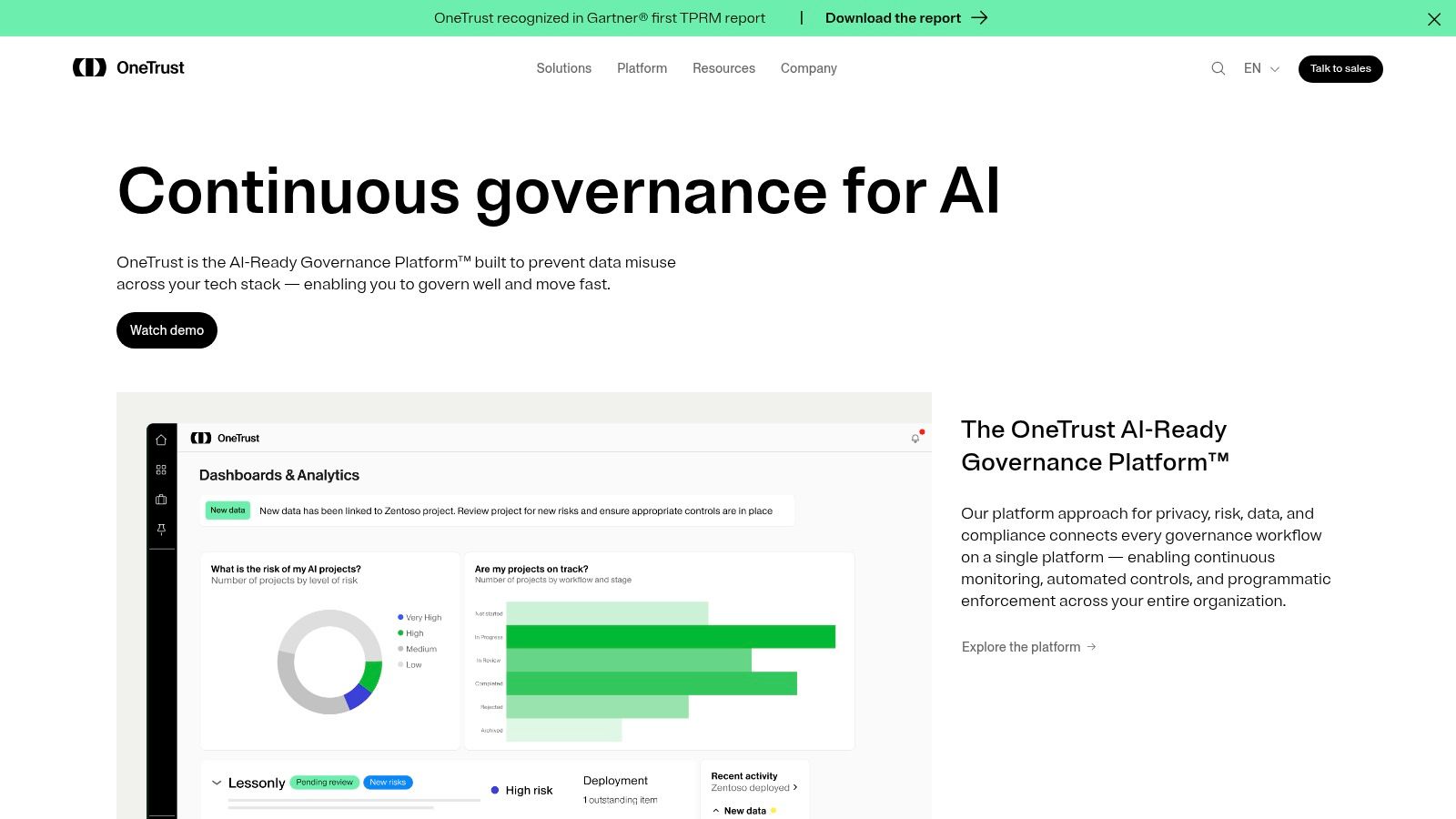
OneTrust is one of the clearest examples of an Atlanta company operating in a category that keeps getting more important. Privacy, consent management, third-party risk, ESG workflows, and AI governance aren’t side projects for large companies anymore. They’re operational requirements.
For candidates, that creates a different kind of hiring environment than a consumer app or a lightweight SaaS tool. OneTrust sits close to legal, security, compliance, procurement, and platform engineering. If your background crosses functions well, that’s a plus. If you only like narrow scope, this kind of company can feel heavy.
OneTrust’s product stack is broad. It covers consent and preference management across digital properties, data discovery and mapping, subject-rights workflows, vendor risk assessments, and AI governance. That usually translates into demand for product managers who can handle regulation-heavy roadmaps, engineers who can work on enterprise workflows, and customer-facing talent who can manage complex implementations.
This is the kind of company where “enterprise readiness” matters. Hiring managers often favor candidates who can show they’ve worked with stakeholder-heavy products, long sales cycles, or systems that touch security and legal review. If you’re applying from a smaller startup, make that translation explicit.
Practical rule: Don’t pitch yourself as a generalist problem solver alone. Pitch yourself as someone who can reduce risk, handle complexity, and ship in regulated environments.
For job seekers exploring Atlanta tech jobs with startup context, OneTrust is a useful benchmark. It shows what Atlanta can produce when the market rewards trust, governance, and operational depth rather than pure growth storytelling.
The upside is clear. OneTrust works in a category with staying power, and broad product coverage can give candidates exposure to several adjacent disciplines at once. That’s valuable if you want to move later into security, privacy tech, governance tooling, or enterprise platform roles.
The downside is also real. Sales-led pricing and a wide platform scope often come with longer onboarding cycles, more process, and more internal coordination. Some candidates thrive in that. Others get frustrated because every launch involves multiple teams and stricter controls.
A strong fit here usually looks like this:
If you want a startup in Atlanta that feels closer to enterprise infrastructure than startup chaos, OneTrust deserves serious attention.
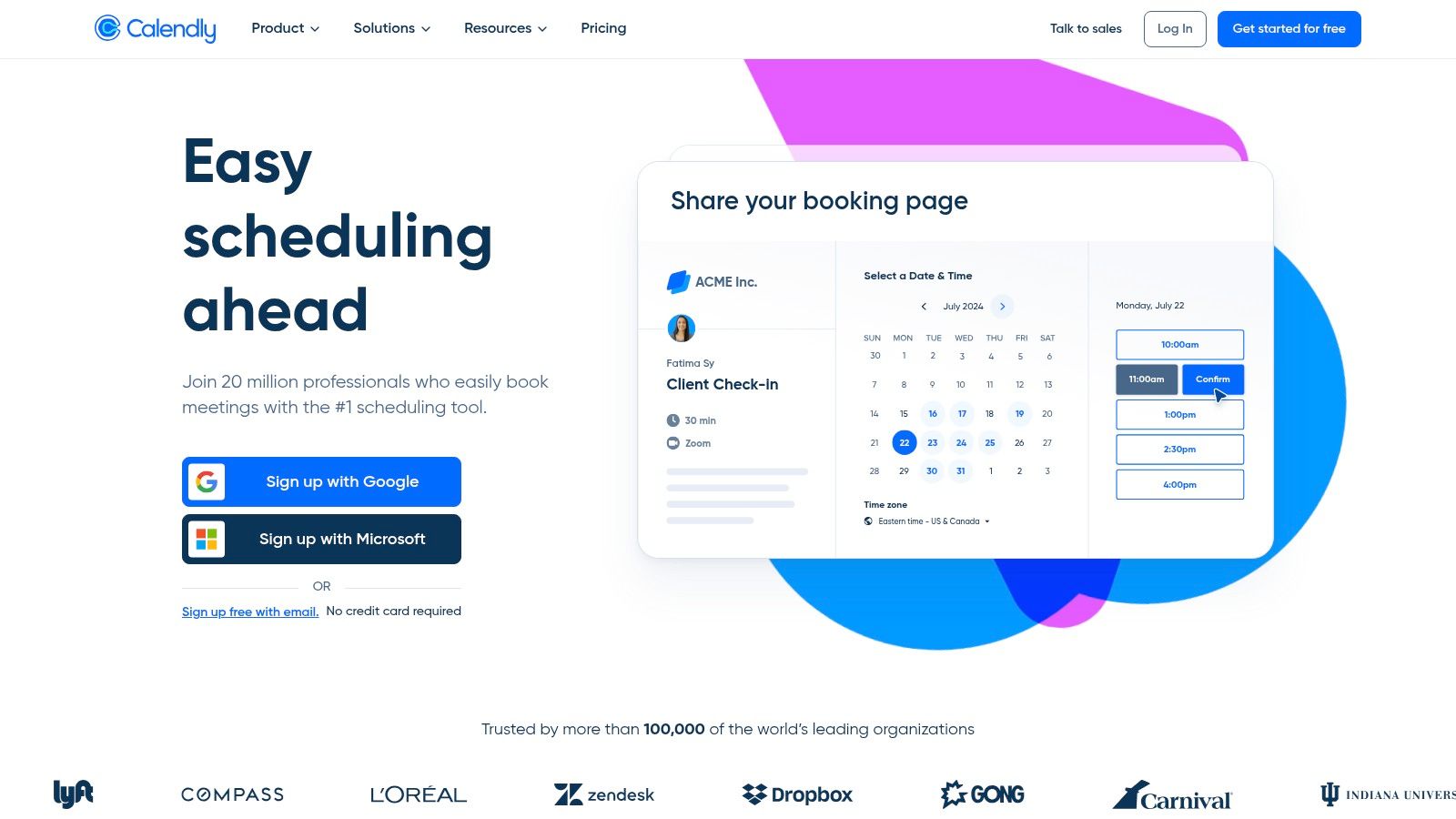
Calendly is Atlanta-born, widely recognized, and a useful case study in how a simple product can become infrastructure. Calendly started with a narrow pain point, scheduling, and turned it into a platform used by sales, recruiting, customer success, and operations teams.
That matters for job seekers because companies like this often hire people who can operate on a clean product surface while thinking through messy workflow consequences. Round-robin scheduling, routing, analytics, governance controls, and integrations don’t sound glamorous on paper. In practice, they’re the backbone of revenue and recruiting operations.
Even though Calendly is remote-first today and doesn’t carry the same “physical Atlanta HQ” signal some candidates want, it still belongs in any serious conversation about startups in Atlanta. It’s proof that Atlanta can produce software with broad adoption and clear product-market fit.
The hiring lesson is simple. Companies in this category want people who understand product simplicity from the user side and operational depth behind the scenes. Engineers need to think about reliability and integrations. Product managers need judgment around workflows. GTM candidates need to explain obvious value without overselling.
If you’re trying to find startup jobs without getting lost in broad job boards, Calendly is the kind of company profile worth studying even if the open role isn’t local. It shows what strong startup packaging looks like: clear use case, broad market, low-friction adoption.
The strongest candidates for workflow software companies usually explain how their work reduced friction for users, not just how many features they shipped.
The biggest strength is product clarity. Guests don’t need training to use Calendly, and that kind of adoption often creates strong internal standards for product quality. Team workflows for recruiting, sales, and customer success also make it attractive to candidates who want exposure to revenue-adjacent software rather than purely technical infrastructure.
The common mistake is assuming “simple product” means “simple company.” It doesn’t. Once software touches CRM, ATS, calendar systems, video, admin controls, and routing logic, complexity moves from the interface into the systems layer.
A practical read on fit:
Candidates who do best with companies like Calendly usually appreciate disciplined execution more than startup theatrics.

Consumer fintech can look simple from the outside. Greenlight is a good reminder that the hiring story is usually more interesting than the product pitch. A debit card for kids is easy to explain. Building the systems behind parental controls, account permissions, payments, fraud prevention, and trust is not.
That mix makes Greenlight a strong target for job seekers who want fintech exposure without disappearing into back-office infrastructure. The customer problem is obvious. The operational demands are still high.
Greenlight offers parent-managed debit cards, spend controls, alerts, allowance tools, savings features, and investing experiences. For candidates, that usually translates into several workstreams under one roof: mobile product, payment operations, family account logic, retention marketing, customer support, and trust-and-safety.
That matters in Atlanta.
The city has long had depth in payments and financial technology, so candidates often find a better local network here for fintech hiring than they would in a smaller startup market. Greenlight also sits in a category where user empathy has to coexist with compliance discipline. That combination tends to separate candidates who can build pleasant consumer experiences from candidates who can build products people trust with money.
Job descriptions tell the story early. Openings in fraud, risk, disputes, lifecycle, mobile engineering, or product analytics usually indicate a company is working on retention, unit economics, and operational maturity, not just top-of-funnel growth.
For Greenlight specifically, I would pay attention to three signals:
The candidate profile that tends to do well here is specific. Product designers need strong instincts around trust cues, permissions, and financial behavior. Engineers need comfort with payment-sensitive systems and edge cases. Growth and lifecycle marketers need to understand that family adoption is rarely a one-user funnel.
Reality check: In family fintech, feature polish gets attention. Reliability and trust keep the subscription active.
There are trade-offs.
Greenlight is a strong fit for candidates who want consumer product work with tighter operating constraints than a typical app company. If your background sits at the intersection of product judgment, risk awareness, and customer trust, this is one of the more useful Atlanta startups to track.
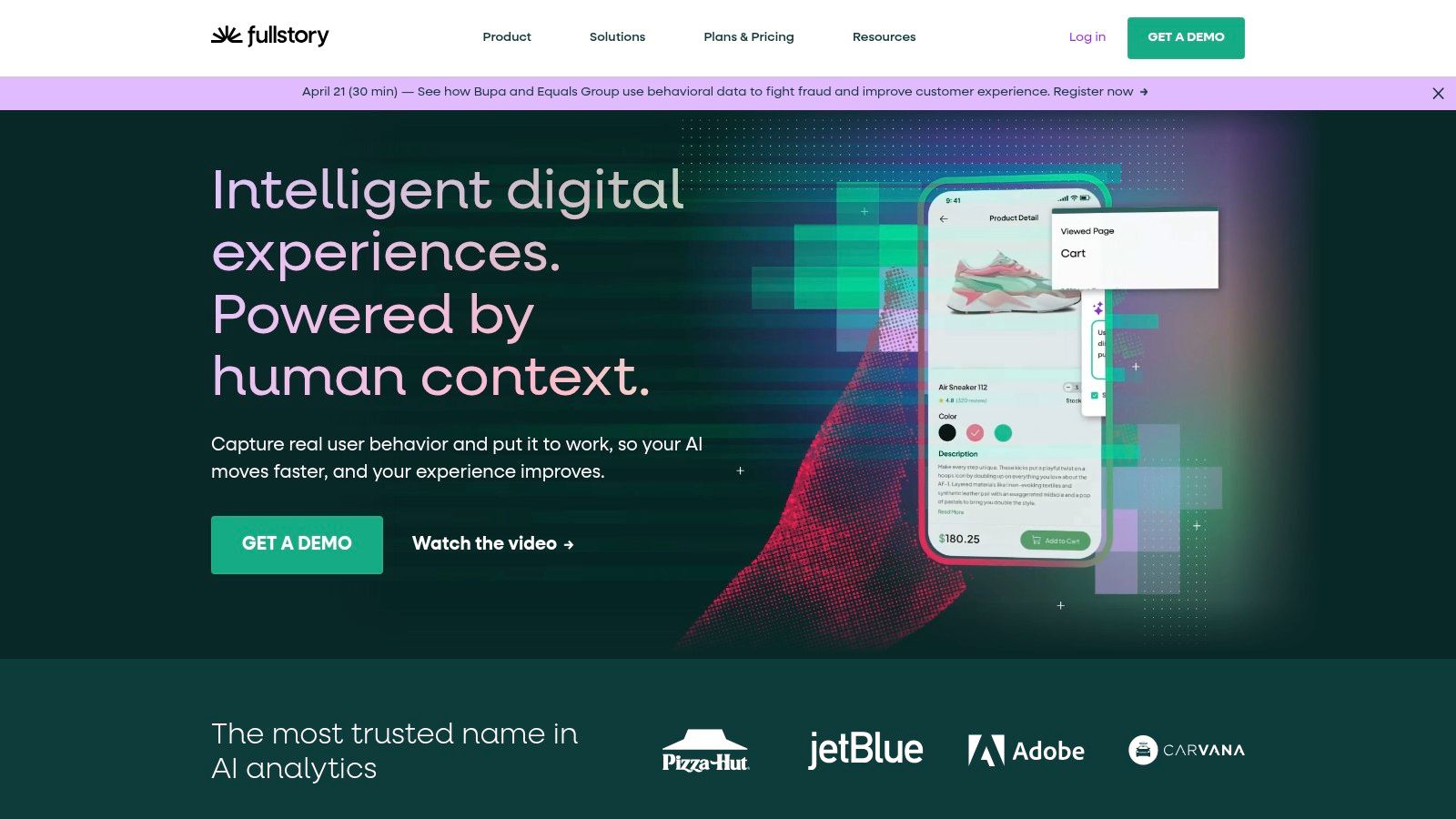
Some Atlanta startups are easy to explain in one sentence. FullStory isn’t one of them, and that’s part of the appeal. FullStory sits at the intersection of analytics, product tooling, session replay, customer experience, and privacy-conscious data capture.
That creates strong opportunities for candidates who like products with both technical depth and obvious business impact. Product teams use behavioral data to diagnose friction. Engineering teams use session replay to debug issues. Support teams use context to understand failures faster. Revenue teams care because user experience affects conversion.
FullStory’s core features include session replay, autocapture, privacy controls, funnels, segments, dashboards, and broader digital experience intelligence capabilities. It also offers add-ons for mobile analytics, in-app guidance, surveys, and AI-assisted summaries.
That kind of platform tends to create hiring demand across product analytics, frontend and data engineering, developer tooling, technical support, security, and implementation roles. It’s a good target for candidates who want to work on software used by other product-led companies.
The caution is legal and operational complexity. Any company capturing behavioral data at scale has to think carefully about governance, customer expectations, privacy settings, and internal controls. Candidates who speak comfortably about responsible data collection tend to sound much stronger in interviews than those who only focus on insight generation.
I’d put FullStory in the “strong for product-minded technical talent” category. If you enjoy translating messy user behavior into decisions, this kind of environment can be rewarding. If you prefer detached infrastructure work with little user context, it may feel indirect.
A few things candidates should get right:
"Good analytics candidates explain what decision a metric changes."
That’s especially true for FullStory-type environments. The free tier lowers evaluation friction for startups, which also means the company has to support a broad range of user maturity. Some customers need advanced workflow guidance. Others need proof of value quickly.
For job seekers who want a startup in Atlanta with technical substance and real customer-facing outcomes, FullStory is one of the better options on this list.

Atlanta has produced few startup categories with more staying power than logistics tech, and Stord sits close to the center of that market. The company combines software with fulfillment, warehousing, and freight execution. For job seekers, that mix matters because hiring needs tend to span engineering, operations, implementation, analytics, customer success, and enterprise-facing commercial roles.
This is one of the clearer signals in Atlanta’s startup scene. Stord is tied to a business problem companies will keep paying to solve: getting products where they need to go, on time, with better visibility and fewer handoff failures.
Stord stands out because the product is not confined to a dashboard. The company’s work touches inventory placement, warehouse performance, transportation coordination, and the software systems customers use to monitor all of it. That creates a different hiring profile from a pure SaaS startup.
Candidates with hybrid backgrounds usually have an edge here. A recruiter will notice the operations manager who can speak credibly about system adoption, or the product candidate who understands what happens when a warehouse misses a cut-off time. Companies like this need people who can connect software decisions to real service outcomes.
If you want a useful reference point for how startups recruit across both technical and operational teams, Stord fits well. Process discipline shows up earlier in logistics businesses because customers feel mistakes immediately.
I would not pitch yourself to Stord as someone who only likes abstract strategy. The stronger angle is execution under constraints.
Hiring teams in this category usually respond well to candidates who can show a few specific traits:
That last point matters. Startup candidates sometimes assume every strong company wants pure speed. In logistics, speed without control usually creates expensive cleanup work.
Stord can be a strong fit for people who want exposure to a hard business with real operating complexity. It is also less forgiving than companies where mistakes stay inside a product roadmap or an internal sprint cycle. Fulfillment issues show up in customer deliveries, support escalations, and account pressure.
That changes the day-to-day experience. The work can be less glamorous than a consumer app or a trend-driven AI product, but the skill development is often more durable. People who do well in environments like this tend to like accountability, clear service metrics, and decisions that have visible consequences.
For Atlanta job seekers, that is the main reason to watch Stord. It offers a path into startup work where software and operations are tightly connected, and that combination tends to produce candidates with stronger long-term range.
Public safety technology draws more scrutiny than the average SaaS category, and that fact shapes the hiring picture as much as the product does. Flock Safety builds connected camera systems, vehicle intelligence tools, and cloud software used by neighborhoods, businesses, and law enforcement agencies.
For job seekers, that makes Flock different from a standard Atlanta startup target. The company can offer real scale, recurring revenue mechanics, and a wide range of roles. It also asks candidates to get comfortable with harder questions around privacy, policy, public trust, and customer accountability.
That trade-off is the first screen.
Flock is often a strong fit for people who want work tied to visible outcomes and can handle a product category where implementation details matter. Camera placement, data retention, access controls, auditability, and customer training are not side issues here. They affect how the product is perceived, adopted, and defended. Candidates who understand that tend to interview better because they speak to the actual operating environment, not just the feature set.
The hiring signals are practical. A company with hardware, software, and public sector customers usually needs more than product engineers. Look for roles tied to deployment, implementation, customer success, field operations, solutions work, security, compliance, and sales support. For Atlanta candidates, that breadth matters because it creates entry points beyond pure software engineering.
Flock makes sense for candidates who can work through tension without becoming vague or defensive. Hiring teams in this kind of business usually respond well to people who can explain their judgment clearly, especially when the topic involves trade-offs instead of easy answers.
Good signs include:
Some candidates should pass. If you want a low-friction product story, short sales cycles, or a company that stays far away from public debate, this is probably the wrong target.
Hiring lens: Strong candidates for Flock answer tough questions directly. They show judgment, not rehearsed mission language.
That is the key value in watching Flock Safety as part of an Atlanta job search. It is not just a recognizable startup. It is a company where the interview process is likely to test whether you can handle a sensitive product category with maturity, precision, and credibility.
Voice fraud has become a real hiring signal. As synthetic voice tools get cheaper and easier to use, companies handling phone-based identity checks have to treat audio trust as a product and security problem, not a niche feature request. That shift puts Pindrop in a stronger position than many candidates assume.
Pindrop sits at an unusual intersection of voice security, authentication, fraud detection, and synthetic media detection for contact centers and meeting environments. For job seekers, that matters because the company is tied to a concrete budget line. Fraud losses, account takeover risk, and bad authentication flows are expensive. Teams working on those problems usually get more executive attention than teams attached to vague innovation mandates.
This is a better target for candidates who want applied security work. The product connects machine learning, risk scoring, voice biometrics, audio analysis, and enterprise integrations in a setting where customers care about uptime, accuracy, and false positives. That creates meaningful trade-offs. A model that catches more fraud but blocks legitimate users can create as much operational pain as the threat it was built to stop.
That hiring profile is distinct within Atlanta's startup market. Pindrop is less about broad consumer growth and more about enterprise depth. Candidates coming from fraud, identity, trust and safety, contact center software, or applied ML often have a clearer story here than candidates whose background is limited to general SaaS.
Roles tend to make sense for a few specific profiles:
Pindrop also rewards candidates who interview with operational realism. Contact center environments are messy. Legacy systems, noisy audio, compliance constraints, and long deployment cycles all shape the work. Interviewers will usually respond well to people who can discuss edge cases, implementation risk, and measurement, not just high-level AI enthusiasm.
A strong application usually shows three things:
For Atlanta candidates building a focused search, Pindrop is worth tracking because it offers category specialization that can compound. Experience in voice, identity, and fraud travels well into adjacent security and trust roles later. That makes it a strong option for job seekers who want sharper positioning than another generic AI startup can offer.
| Product | Implementation complexity | Resource requirements | Expected outcomes | Ideal use cases | Key advantages |
|---|---|---|---|---|---|
| OneTrust | High, modular enterprise onboarding, longer rollout for full stack | Dedicated privacy/compliance teams, integrations, premium budget | Centralized compliance, automated subject‑rights and consent workflows | Large enterprises, regulated industries, global privacy programs | Broad “trust stack”, vendor consolidation, AI governance tools |
| Calendly | Low, quick setup and admin configuration | Minimal IT, per‑seat subscriptions, calendar/CRM integrations | Reduced scheduling friction, faster meeting coordination | Sales, recruiting, customer success, SMBs to enterprises | Widely adopted, low guest friction, team routing workflows |
| Greenlight | Low–Medium, family account setup and parental controls | Monthly subscription, parent engagement and monitoring | Improved kids’ financial literacy, controlled spending and allowances | Families with kids/teens teaching money management | Parent‑controlled cards, chore/allowance automation, savings tools |
| FullStory | Medium, instrumentation and privacy governance required | Analytics/product team, data capture/storage, possible add‑ons cost | UX insights, session replay, faster detection of conversion issues | Product, UX, engineering teams optimizing digital funnels | Session replay + analytics, strong UX signal detection, free tier available |
| Stord | Medium–High, systems integration and operational onboarding | Logistics budget, inventory volume commitment, integration effort | Unified fulfillment/warehousing, scalable seasonal operations | Ecommerce brands scaling DTC/B2B across channels and seasons | Single contract/platform for 3PL, nationwide fulfillment network |
| Flock Safety | Medium, hardware installation plus governance and placement planning | Subscription with hardware, installation/maintenance, deployment density | Improved incident detection and searchable investigative evidence | Neighborhoods, businesses, law enforcement focused on vehicle crime | Turnkey managed hardware+software, clear outcomes for investigations |
| Pindrop | Medium–High, CCaaS integration and contact‑center change management | Contact center integration resources, security teams, licensing | Reduced fraud, faster caller authentication, call risk scoring | Contact centers, financial services, high‑fraud environments | Voice biometrics, deepfake detection, native CX platform integrations |
Atlanta has enough startup volume now that broad, untargeted applying usually produces weak results. Candidates who get traction tend to pick a narrow lane, show clear category fit, and approach companies with a reason that makes sense for that business.
That matters because Atlanta is not one startup market. It is several hiring markets running at once. Fintech, logistics, cybersecurity, enterprise SaaS, ecommerce infrastructure, and public safety tech all ask for different experience, different examples, and different interview stories. A backend engineer with payments or fraud experience should present very differently from a designer coming out of a consumer subscription app. Both may be strong. Only one may fit the company’s current stage and product motion.
Job seekers should pay close attention to hiring signals, not just recognizable names. If a startup is hiring implementation, customer success, and product infrastructure roles at the same time, that usually points to customer demand, operational strain, and a team that needs people who can execute without much hand-holding. Those are useful signals for candidates because they say more about the work than a polished careers page does.
Atlanta also rewards local network density. The city has a mature support system around founders and operators, and that shows up in hiring. Organizations such as Atlanta Tech Village, ATDC, Flashpoint, and Venture Atlanta often surface active companies before the broader job boards catch up. Startup incubator research on Atlanta and Angel Atlanta ecosystem notes also reinforce a practical point for candidates: many of the best opportunities here sit close to B2B partnerships, enterprise sales cycles, and relationship-driven growth.
Candidates who run a disciplined search usually do four things well:
Atlanta's talent story is strong, but the gap for many applicants is positioning.
That gap creates opportunity. Coverage of Atlanta startups usually focuses on funding, accelerators, and founders. Hiring gets less attention. For job seekers, that means better odds if you show up with a sharper point of view than the average applicant. Instead of saying you want to work at a startup, explain why your background fits a specific market, customer, or operating problem.
Direct outreach also works well here, especially with earlier-stage teams. Keep it short. Mention the category you know, the problem you have worked on before, and where you could add value in your first few months. That approach tends to outperform generic enthusiasm.
If you want a quieter path into startup hiring, Underdog.io is worth a look. You submit one application, get considered for vetted startup roles, and avoid spending all your time chasing listings that may never turn into a real conversation.
Atlanta is a good market for candidates who are selective, credible, and category-aware. Pick the right lane. Read the hiring signals. Tell a story that matches the company’s stage and needs.