Phantom equity is a cash payment tied to the value of company shares or the increase in that value, without granting actual shares or ownership rights. It emerged in the 1970s and 1980s, became more common among small businesses and LLCs during the 1990s and 2000s, and now sits at the intersection of compensation, tax timing, dilution, and company cash planning.
A senior candidate might see “equity” in an offer and assume they'll receive something that behaves like stock. A founder might use the same word to describe a retention award that leaves the cap table untouched. Those assumptions can produce very different outcomes. Phantom equity is best understood as a contractual promise of future compensation that mirrors stock economics, not as ownership itself.
A startup hiring manager has found the right senior engineer. The candidate is interested, but the company is private, the next liquidity event is uncertain, and the option grant doesn't feel compelling enough to offset the risk. Issuing more actual equity would also affect the cap table. RSUs may be awkward because the company can't offer the kind of liquidity or public-market pricing that makes them easy to understand.
The company may instead offer a cash award linked to future company value. The candidate doesn't receive shares, voting rights, or a place on the ownership register. If the company grows and a defined trigger occurs, the candidate receives money under the plan's formula.
That arrangement can address a real compensation problem, especially for:
The underlying tension is simple. Candidates want meaningful participation in growth. Founders want to preserve control and avoid further dilution. Private companies also need a plan that works even when there isn't a readily observable public-market price.
Phantom equity can bridge that gap, but only if both sides understand what is being promised. The headline may look like a stock award. The legal document may function more like deferred cash compensation. That difference affects the payment trigger, valuation method, taxes, accounting treatment, and the company's ability to fund the eventual obligation.
Think of phantom equity as a scoreboard connected to company value, not as a share certificate. The company records hypothetical units for the participant, tracks the agreed value, and pays cash when the plan says payment is due. No shares are issued, so the participant doesn't receive voting power or statutory information rights, while the founders preserve cap-table control. The National Center for Employee Ownership's explanation of phantom stock and SARs describes this structure as a way to deliver equity-linked value without issuing actual shares.
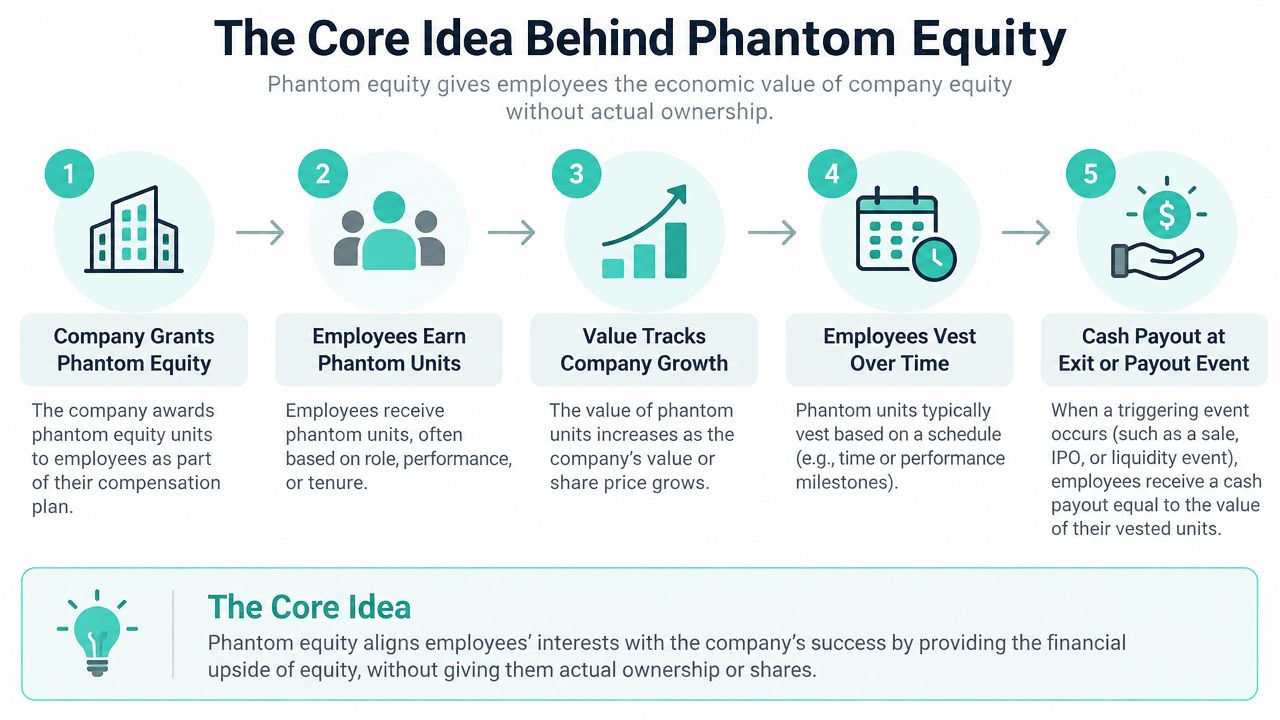
For an appreciation-based award, the core calculation is:
Payout = (exit value per unit minus baseline value per unit) × vested units
Suppose a participant receives units with a baseline value of $10 per unit. If the value at the defined trigger is $25 per unit and the participant has 1,000 vested units, the appreciation component is based on the $15 increase multiplied by those vested units. The exact result still depends on the plan's valuation rules, adjustments, caps, and treatment of transaction costs.
Practical rule: Never evaluate “units” without asking what value sits behind each unit, when that value is measured, and whether the award covers appreciation or the full notional value.
The structure resembles a stock award economically, but it isn't stock legally. The participant generally can't vote, inspect company records through statutory shareholder rights, or sell the award to another person. The company can align compensation with growth while keeping ownership and governance separate.
The right instrument depends on what the company wants to reward and what the participant can realistically use. Options offer the possibility of buying shares at an exercise price, while RSUs promise shares or their value after vesting. SARs provide appreciation-based value without requiring the participant to purchase the underlying shares. Phantom equity usually stays cash-settled and non-dilutive.
FeatureStock OptionsRSUsSARsPhantom EquityReal equity issuedYes, after exerciseYes, when settledUsually no shares unless settled that wayNoExercise requiredYesNoUsually no cash exerciseNoDilutionYes, when shares are issuedYes, when shares are issuedPotentially, if share-settledNo share dilutionTypical tax characterOrdinary income can apply at exercise, with later appreciation potentially treated as capital gainOrdinary income generally applies when shares vest or settleCommonly ordinary income at settlement, depending on structureCash settlement is generally ordinary incomePrivate-company fitCan work, but exercise and liquidity create frictionCan work, but settlement and valuation require planningOften useful where appreciation is the focusWell suited when the company wants value alignment without changing ownershipPublic-market price neededNo, but private valuation is requiredNo, but private valuation is requiredNo, but a defensible valuation is requiredNo, but the plan needs a defined valuation method
Options create a path to actual ownership, but the participant must generally exercise them. That can require cash and can create a tax bill before the participant has liquidity. RSUs don't require exercise, but they still issue real shares and can dilute existing holders. For a deeper explanation of how private-company options work, see Underdog's guide to private-company stock options.
SARs are close relatives of phantom equity because they commonly reward only the increase in value. The distinction often rests on settlement mechanics, plan design, and whether the award is intended for cash or shares. Phantom equity is often easier to explain as a deferred cash promise, particularly for a private company that wants to avoid issuing stock.
Dilution is the key founder-side distinction. A company can offer a valuable phantom award without adding shares to the capitalization table, but that doesn't mean the award is free. The company takes on a future compensation liability, and the participant trades ownership rights for a contractual claim.
Founders who want a plain-language overview of how issuing equity affects ownership can also consult this equity dilution guide from By Design Law Firm & Legal Consultancy, PLLC. It helps separate two questions that often get blended together: who owns the company, and who has a contractual right to receive value from it.
A phantom award can look simple on paper while three clocks move separately: the company's accounting clock, the employee's income-tax clock, and the payroll-tax clock. The company may record a liability before anyone receives cash. Income tax may wait until payment, while FICA can arise at vesting.
At grant, the employee generally does not recognize income when the arrangement qualifies as compliant nonqualified deferred compensation. The company records and remeasures the obligation under its applicable accounting framework, with changes in fair value affecting compensation expense over time. Since no shares transfer, the award is accounted for differently from actual stock.
Section 409A provides the main structural guardrails. It controls when deferred compensation may be paid, which events can trigger payment, and how the plan restricts improper acceleration. Phantom equity is one form of equity compensation for startups, and plans often need to fit within Section 409A, as summarized in this phantom equity overview from EquityMatrix.
Vesting can create the largest cash-flow surprise. Under the special payroll-tax timing rule in IRC Section 3121(v)(2), Social Security and Medicare taxes can apply to the fair market value of phantom stock when it is credited at vesting, even though the participant cannot yet collect the award. This creates a mismatch: income tax may be deferred until payout, while FICA may arrive earlier, as explained in this phantom stock tax analysis from KR Taxes.
The employee may therefore owe payroll taxes on a benefit that cannot be sold or accessed. The plan documents and payroll process should state who withholds the tax, whether the company funds that withholding, and how the employee handles the gap between the tax bill and the eventual payout.
When a compliant plan pays cash, the participant generally recognizes ordinary income rather than capital gains. The employer generally receives a corresponding compensation deduction when payment is made, subject to general limits such as reasonableness under Section 162, as explained in RSM's phantom stock plan tax FAQs.
A Section 409A violation can trigger retroactive income taxation beginning in the first violation year, interest, and a 20% excise tax on recognized income, according to this Section 409A guide from EisnerAmper. Candidates should ask how valuation dates, payment triggers, withholding, and FICA treatment are defined. Founders should test those terms before promising a payout the company cannot fund.
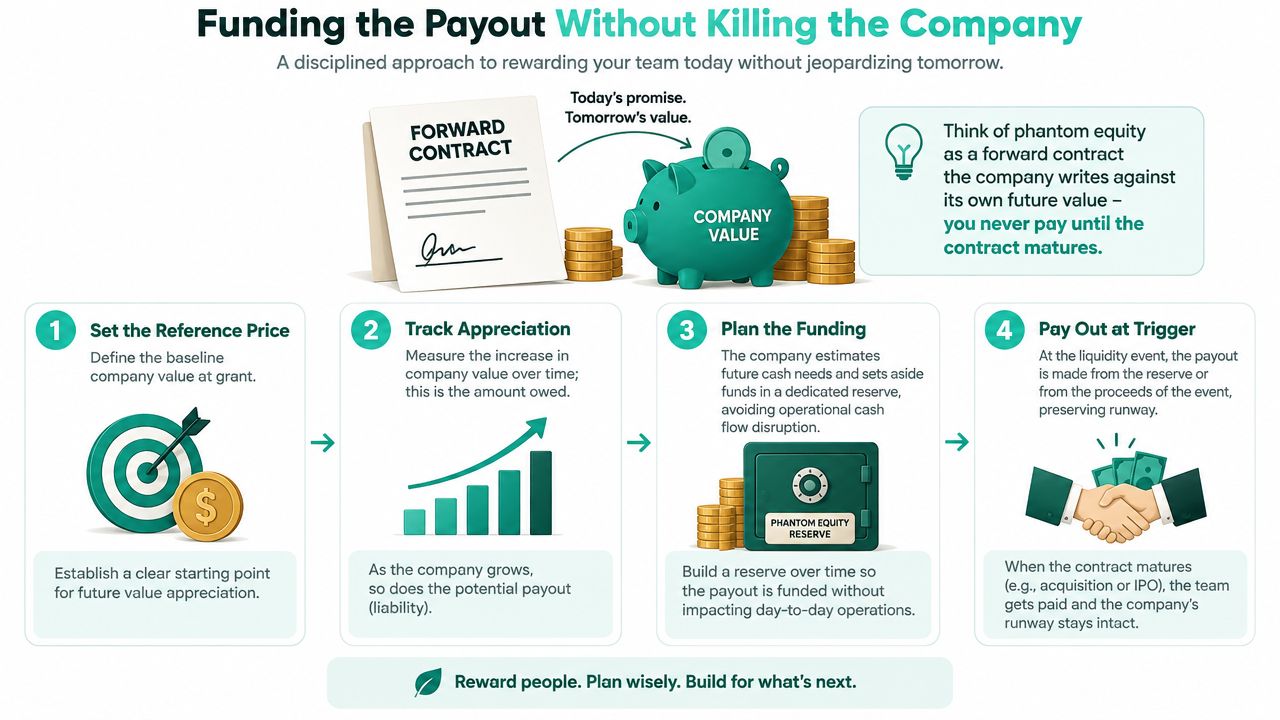
Phantom equity is a forward contract written against the company's future value. The company doesn't pay at grant, but it still needs a credible source of cash when the contract matures. “No dilution” describes the ownership effect. It doesn't eliminate the cash obligation.
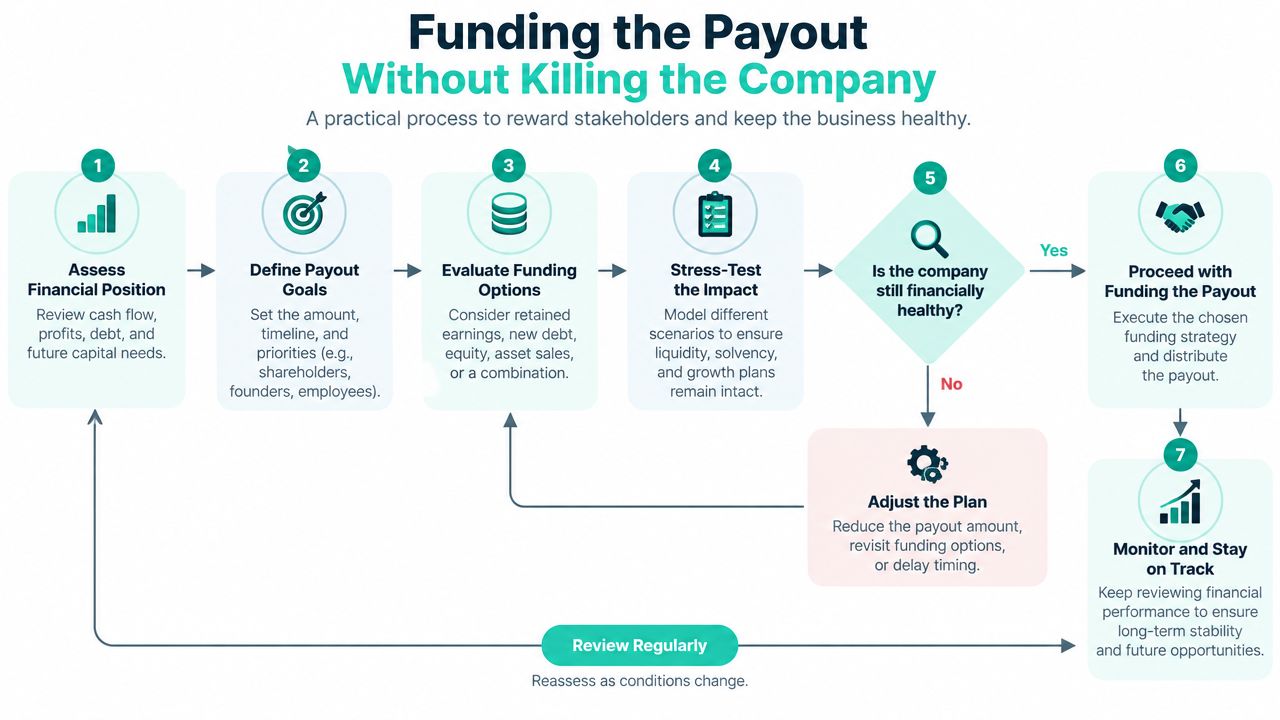
Operating cash at the trigger event is the cleanest route when the company has predictable liquidity and the payout is modest relative to available cash. The board should still test whether paying the award would interfere with payroll, hiring, debt service, or product investment.
A reserve built over time creates a more deliberate buffer. The company can use its accounting liability as a planning signal, then translate that obligation into an actual cash-reserve policy. Accounting accruals don't automatically place cash in a separate account, so finance leaders must make the funding decision explicitly.
Transaction proceeds may cover the bill in an acquisition, tender offer, or other liquidity event. The transaction model should subtract the projected phantom obligation from expected proceeds before anyone treats the headline purchase price as distributable value.
Insurance or share-buyer arrangements may hedge some exposure, but these structures require specialist legal, tax, and financial review. They shouldn't be treated as automatic substitutes for a reserve.
A sensible model estimates the expected liability at the payout date, considers the probability of each trigger and valuation outcome, and discounts the expected cash need back to the present. The reserve target won't necessarily equal the award's headline value because vesting, timing, probability, caps, and value growth all affect the expected obligation.
Founders should remember the difference this way: phantom equity doesn't dilute the cap table, but it can dilute cash available to operate the company.
Trigger events, leaver provisions, and payout caps therefore function as cash-flow controls. A plan that pays only on a sale behaves differently from one that pays on a fixed date. A plan that accelerates after every departure can create a sudden liability, while a carefully defined double-trigger structure may keep the obligation tied to a real transaction.
Founders reviewing plan language can use an AI legal assistant for business owners from LegesGPT to organize questions and flag drafting issues for counsel, but final plan terms still need qualified legal and tax review. Practitioner guidance also emphasizes modeling proceeds net of the liability and aligning payouts with available cash, rather than assuming an exit will solve every funding problem, as discussed in this phantom stock plan funding guide.
Consider a senior engineer joining a 40-person Series B startup at a $180,000 base salary, with phantom units tied to 0.5% of fully diluted value, a four-year vest, and a one-year cliff. The award includes good-leaver treatment for termination without cause and a change-of-control double trigger that vests 100% on the required combination of events.
The candidate's first question shouldn't be “What is 0.5% worth?” It should be “0.5% of what, measured when, and after which deductions?” If the plan uses appreciation-only units, the grant-day reference value is deducted from the value at the trigger. If it uses a full-value formula, the baseline may not reduce the payout in the same way.
At a mid-vest valuation after a flat funding round, the candidate may see little or no appreciation even though the company has continued operating successfully. At a hypothetical exit at a $300 million enterprise value, the eventual payout still can't be calculated from that headline alone. The plan may use equity value rather than enterprise value, subtract debt and transaction expenses, apply a 409A-aligned valuation method, and include a valuation haircut or other adjustment. Without those definitions, there is no supportable specific dollar figure.
The founder sees the same award differently. The company records a liability that changes as the estimated value of the award changes. By the third year, the obligation may be materially higher than at grant, even though no cash has yet left the business. The company should have built a reserve or transaction model that reflects that liability before a tender offer arrives.
Two key holders could vest or become payable at the same time. That event exposes gaps that looked harmless when the plan was drafted.
The lesson is not that phantom equity is impossible to value. It's that the formula must be written before the offer is accepted.
Negotiation works better when both sides treat the plan as a shared design problem. Candidates need clarity about the value they may receive. Founders need limits that keep a well-intentioned incentive from becoming an operational emergency.
Ask for the reference-price definition in writing. It should identify the valuation source, the relevant date, and whether the award tracks enterprise value, equity value, or appreciation after specified deductions.
Request explicit treatment for:
A deferred-cash election can be valuable, but it isn't automatically available and must be designed within the applicable tax rules. The candidate should also ask how the company handles payroll taxes that may arise before cash settlement.
Founders should insist on a 409A-compatible structure, a clear valuation process, and a settlement cap that prevents one departure from consuming disproportionate runway. Vesting acceleration should generally be tied to carefully defined double-trigger events rather than every transaction or termination.
The plan should also state whether the company can settle in cash or shares. A cash-only promise is easier for the participant to understand, but it places the full funding burden on the company. A share-settlement option can change the tax and ownership analysis, so it needs careful drafting rather than a casual fallback.
For candidates comparing this instrument with traditional options, Underdog's guide to negotiating stock options offers useful questions to adapt to a phantom-equity discussion.
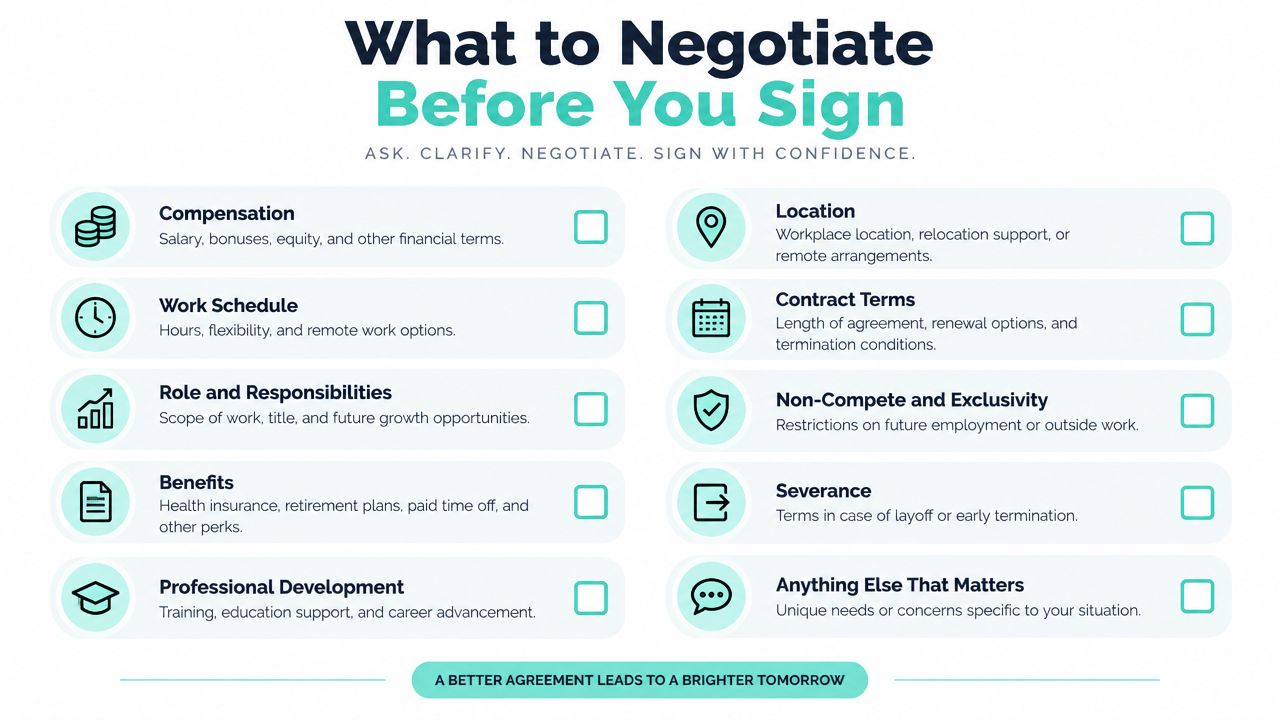
Both parties should leave with a one-page term summary covering vesting, triggers, leaver categories, valuation source, payout formula, tax handling, and funding source. The summary won't replace the plan document, but it can expose disagreement before signatures turn ambiguity into a dispute.
A practical decision starts with three questions.
First, what is the company trying to reward? If the goal is retention, vesting and leaver provisions deserve the most attention. If the goal is alignment with growth, the valuation formula matters most. If the goal is a non-dilutive bonus, a conventional bonus with a deferred component may be easier to administer.
Second, has the company modeled the worst-case payout in a downturn and confirmed that it can fund the obligation without relying on an emergency line of credit? The model should account for simultaneous vesting, transaction deductions, caps, and the possibility that a trigger arrives when operating cash is tight.
Third, does tax timing match cash timing? A participant may face ordinary income at payout and FICA at vesting, while the company carries the obligation and manages withholding. Section 409A compliance must be tested before the plan is issued, not after a payment problem appears.
Phantom equity can be a strong fit for senior hires, advisors, directors, and founders balancing retention against dilution. It becomes risky when the plan document leaves valuation, triggers, leaver treatment, or funding vague. A clear cash promise with a defensible formula is useful. An “equity” label attached to an undefined liability isn't.
Underdog.io connects startup and tech candidates with curated opportunities while helping employers reach relevant talent, which can make compensation design part of a broader hiring conversation. Visit Underdog.io to explore startup roles where the equity and cash components deserve careful questions before you sign.